Suite login
-Mar-11-2025-10-07-16-4716-AM.jpg?width=2000&name=Reception%20with%20Guest_00125%20(3)-Mar-11-2025-10-07-16-4716-AM.jpg)




Profitability is becoming harder to protect across UK hospitality.
Rising payroll costs, higher business rates and erratic energy prices are all contributing to a tighter operating environment.
For the sector, April’s payroll changes alone are expected to add £1.4 billion in additional costs *, placing further strain on already tight margins.
Before 2020, hotel operators were accustomed to navigating economic cycles. Today, the pressure feels more sustained. For many of the unique and heritage properties we deal with, priorities have shifted from growth to protecting margins and stabilising revenue.
Increasingly, we are encouraging hoteliers to view loyalty as one of the most effective ways to close this revenue gap.
Reducing leakage after checkout, reducing reliance on costly acquisition channels and building more consistent higher-margin revenue all contribute to stronger long-term value from returning guests.
At Profitroom, we are seeing strong results from our loyalty technology across the market. Among the UK properties using our loyalty solutions, 24% of bookings are now generated by loyalty members, accounting for 13% of gross booking value (GBV).
However, to unlock the full potential of loyalty, it must be combined with marketing automation to ensure that guest relationships continue beyond the stay and are converted into repeat bookings at the right moment.
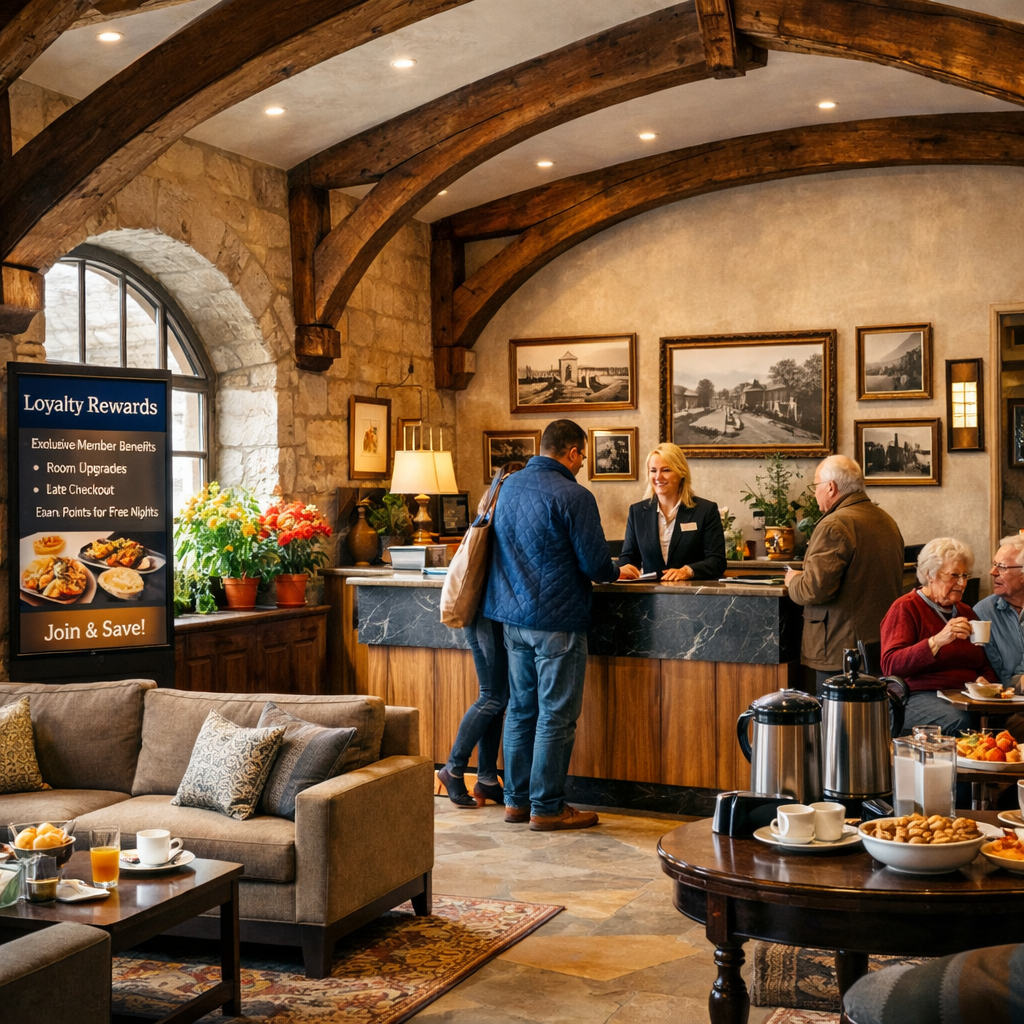
Profitroom Loyalty is designed to work across the full guest journey. From the moment of booking, guests are recognised and rewarded with member-only rates and tailored benefits such as late check out or exclusive offers.
Once a stay is complete, automated personalised messages re-enage guests, encouraging them to return as a direct customer. Integrated CRM and booking engine data ensures guest behaviour is captured and used for personalised offers and packages.
We are already seeing the benefits of our loyalty technology play out.
At Young’s Hotels Group, a portfolio of 56 boutique-style hotels, a focus on direct booking optimisation has delivered strong commercial results. Following the integration of Profitroom’s booking engine and loyalty tools, the group achieved 33% year-on-year growth in gross booking value.
Building on this, Young’s is developing a bespoke loyalty programme with Profitroom and other technology partners. Integrating CRM, website and property management systems to build stronger guest relationships.
At Dalhousie Castle, a 13th-century, 4-star Scottish castle hotel and spa, a fully integrated approach to distribution and guest experience has delivered similarly strong outcomes. The property achieved a 100% increase in online revenue over a four-month period and a 15% reduction in OTA commissions costs.
This, alongside a redesigned booking journey and a 429% increase in loyalty programme enrolment, helped drive a surge in direct bookings, while ADR increased by 21% year-on-year.
These examples highlight the operational weight loyalty can remove from hoteliers’ shoulders amid rising costs.
Too often, hotels invest heavily in attracting and converting guests, only for the value of that relationship to fade after checkout. CRM data is collected but underused. Post-stay engagement is inconsistent. And repeat guests are frequently reacquired through OTAs rather than retained directly.
This creates a clear retention gap.
While boutique hotels, resorts and pub operators may not have the scale of global brands, they can compete more effectively by making better use of the data and guest relationships they already hold.
With the right partner on your side and a careful balance of technology and the human touch, loyalty becomes a lever for working smarter. It helps bring guests back more consistently and extends the value of every stay over time, while allowing operators to focus on delivering the best possible customer experience.
As cost pressures continue to build, that distinction is becoming increasingly important.
In today’s market, success is increasingly defined by what happens after the stay, not just at the point of booking.