Suite login
-Mar-11-2025-10-07-16-4716-AM.jpg?width=2000&name=Reception%20with%20Guest_00125%20(3)-Mar-11-2025-10-07-16-4716-AM.jpg)



.png)
Adapting to Shifting Travel Flows and Unlocking Direct Booking Growth
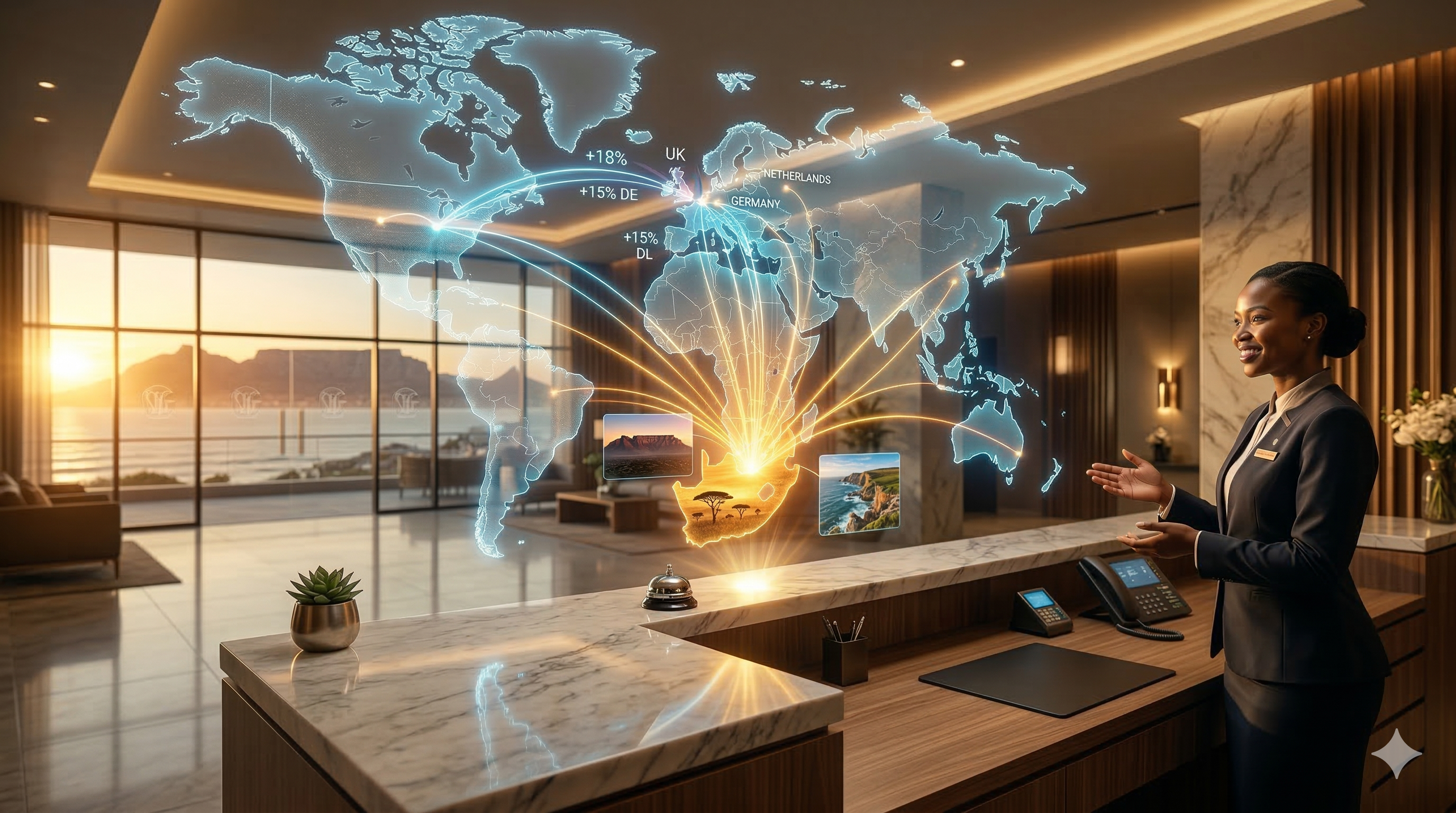
For many long-haul travellers from Europe and the United Kingdom, travel plans for 2026 are shifting.
Destinations across Asia and parts of the Middle East, traditionally popular with UK and European tourists have become more difficult to access due to regional disruptions and changing airline routes. As a result, travellers who would normally choose these regions are reconsidering their options.
Increasingly, they are looking toward Africa and particularly South Africa as a premium alternative.
For hotels across the country, this shift represents a powerful growth opportunity. Inbound travel from both the EU and the UK is already rising rapidly, and current global conditions are accelerating that momentum even further.
However, capturing this demand effectively requires more than simply opening availability.
To truly benefit, hotels must ensure that the right bookings come through the right channels; ideally direct.
EU and UK inbound demand is accelerating
Recent inbound travel trends show strong growth from key European markets:
- United Kingdom: +22.5% year-on-year
- Germany: +66.5% year-on-year
- Netherlands: +88% year-on-year
These markets have always been essential to South Africa’s tourism economy, particularly for destinations such as Cape Town, the Garden Route, and safari regions.
What makes 2026 unique is the speed and timing of this growth.
Travellers who would normally choose destinations in Southeast Asia or the Middle East are now seeking alternatives that offer warm weather, long-haul adventure, and premium hospitality, but with fewer travel uncertainties.
South Africa meets these expectations perfectly. With world-class hospitality, diverse landscapes, exceptional cuisine, and strong tourism infrastructure, the country is increasingly seen as a safe and exciting long-haul destination for UK and European travellers.
A seasonal advantage many hotels overlook
One of the biggest advantages South African hotels have is seasonal complementarity with Europe and the UK.
When the UK and much of Europe move into colder months, South Africa enters its warm travel season. This inverted seasonality creates the perfect escape for travellers looking to swap grey winters for sunshine, vineyards, wildlife, and coastline.
For many hotels, this creates a valuable opportunity to drive bookings during periods that historically performed as shoulder or lower seasons.
With the right positioning, hotels can use growing EU and UK demand to:
- Fill historically quieter periods
- Increase average booking value with international guests
- Extend their profitable season beyond traditional peak months
But with rising demand comes greater competition and that makes channel strategy critical.
Demand growth is only profitable with the right distribution
When international demand increases quickly, Online Travel Agencies often capture a large share of bookings simply because they dominate search visibility.
While OTAs can help drive awareness, relying heavily on them means higher commission costs and less control over the guest relationship.
Fortunately, many travellers from the UK, Germany, and the Netherlands are highly comfortable booking directly with hotels, particularly when they see clear pricing, strong offers, and trustworthy information on the hotel’s website.
This makes direct booking optimisation one of the most important strategies for South African hotels in 2026.
Channel Manager strategies to protect direct revenue
As inbound demand grows, hotels should carefully review their channel distribution strategy.
A few tactical adjustments can significantly improve profitability.
1. Activate “Direct Only” at the right moment
As occupancy increases, consider reserving the remaining room inventory exclusively for your direct channel. This allows the most valuable bookings to come through your own website instead of high-commission platforms.
2. Maintain strict rate parity
International travellers often compare several platforms before making a booking decision. If your website shows the best available rate and clear benefits, guests are far more likely to book directly.
3. Apply smart booking restrictions
Minimum stays, targeted packages, and controlled availability windows can help hotels manage demand effectively while increasing the average booking value.
These tools allow properties to control the pace of reservations while prioritising the most profitable channels.
Four steps to capture EU and UK travellers effectively
To fully leverage the surge in international demand, South African hotels should focus on four key strategic actions.
1. Create EU and UK-facing website content
Your hotel website must clearly speak to international travellers.
Consider highlighting:
- Direct flight routes and accessibility from major European cities
- The seasonal advantage of visiting South Africa during European winter
- Safety, ease of travel, and infrastructure
- Signature local experiences that make the destination unique
Clear messaging builds trust and helps travellers confidently choose South Africa over competing destinations.
2. Optimise direct pricing and curated packages
European and UK guests typically stay longer and look for complete experiences rather than simple room-only bookings.
Hotels can significantly increase revenue by offering curated packages that include:
- Wine tours and culinary experiences
- Safari extensions or guided excursions
- Wellness and spa packages
- Adventure or nature activities
Positioning these packages directly on your website ensures the highest-value bookings come through the direct channel.
3. Prepare for growing MICE demand
Rising international interest also creates opportunities within the Meetings, Incentives, Conferences and Events (MICE) segment.
European companies are increasingly looking for distinctive long-haul destinations for incentive travel and corporate retreats. South Africa’s landscapes, hospitality infrastructure, and favourable seasons make it an attractive choice.
Hotels with clear event offerings, flexible meeting packages, and strong website presentation will be well positioned to capture this segment.
4. Use CRM and automation to convert interest
International travellers often research multiple destinations before committing to a booking.
This makes CRM and marketing automation tools extremely valuable. Automated emails, personalised offers, and remarketing campaigns can reconnect with travellers who have visited your website but not yet completed their reservation.
When implemented correctly, these tools convert early browsing behaviour into confirmed bookings — often directly through your hotel’s website.
Turning a travel shift into long-term growth
The growth of EU and UK inbound tourism to South Africa is more than a temporary reaction to global disruption. It reflects a broader shift in traveller preferences: a search for authentic destinations, unique experiences, and reliable travel conditions.
For South African hotels, the opportunity is significant.
By positioning themselves as a premium alternative for travellers who might otherwise choose Asia or the Middle East and by prioritising strong direct booking strategies hotels can transform this surge in demand into sustainable growth.
The key is acting early, before the majority of bookings are captured by third-party channels.
If you want to ensure your property is ready to capture this surge in international travellers, contact your Profitroom Customer Success Manager to review your direct booking strategy and channel distribution for the upcoming seasons.