Suite login





By Weronika Mothes, Senior Business Development Manager, Nordics
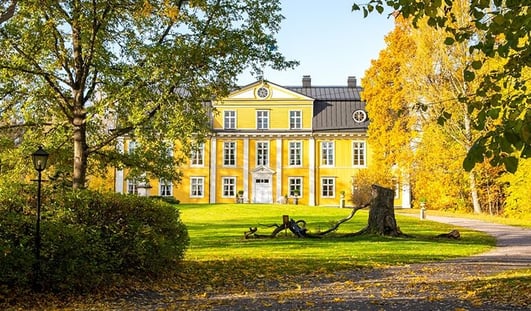
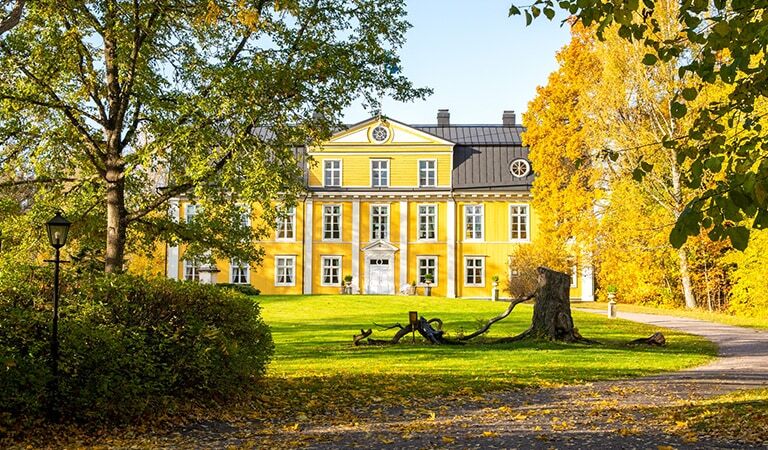
In October, we looked at Mustion Linna, a two-hundred-year-old estate in Raseborg, Southern Finland. By rebuilding around better data and a stronger website, the estate grew direct bookings from 25% to 76% of online reservations. The habit behind that result is one any hotel can copy: look at your own data before assuming a pattern is fixed.
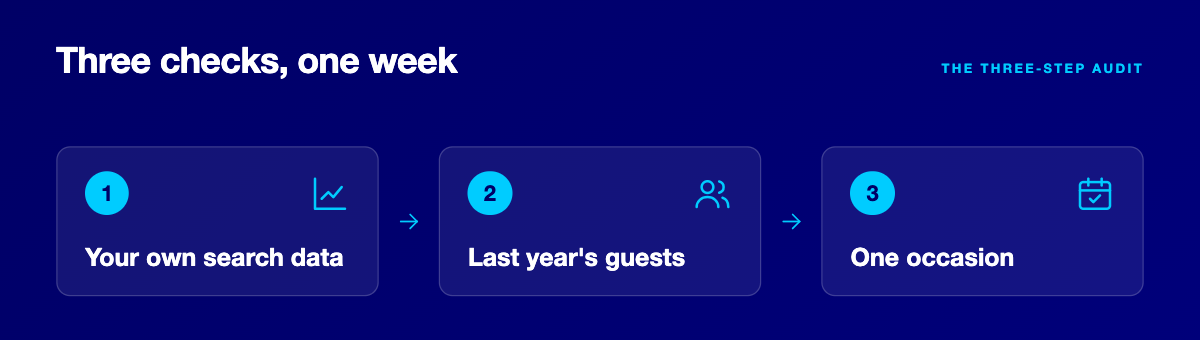
Step one: pull your own search data, not the national average
You do not need Finland-wide statistics to know whether your own hotel is visible during the weeks that matter. Your website analytics and Google Business Profile insights already hold this answer.
Open the last twelve months of traffic to your booking pages and look at it by month, not by season. This is a split many hotels have never made. What you are looking for is whether impressions and clicks stay steady across the year, or whether they fall away outside the two or three months your marketing has always focused on. If your traffic graph looks like your occupancy graph, the two may be linked: your visibility and your booking pattern can take the same shape.
Mustion Linna’s international guests are still a small number, but the estate can see them because its booking data is now good enough to show it. You cannot act on a pattern you cannot see.
If you do not have easy access to this data, ask your website provider or booking engine for it. It should take an afternoon, not a project.
Step two: segment last year’s guests by month as well as by loyalty tier
Many hotel guest databases are organised around who has stayed the most, not around when they stayed. Loyalty tiers are still valuable, but for this exercise add a second view: pull a simple list of everyone who checked out during your peak weeks, sorted by month.
That list is your shoulder season prospect list. A guest who stayed in July has already decided to trust your hotel once. Reaching out to that exact group a few months later, with a specific and different reason to return, is more likely to resonate than a generic newsletter sent to everyone at once, because the message is relevant to a real person rather than an assumed average guest.
Mustion Linna uses its loyalty sign-up mainly to collect guest data, and some guests have already stayed with the estate several times. Data like that makes this step quick.
The practical task is small: export the list, write one email built around a single occasion, and send it. Do not wait for a perfect automated journey before sending the first one manually.
Step three: name one occasion, this month, before building anything else
Once steps one and two reveal a gap, the temptation is to design an entire off-peak strategy before doing anything visible. Resist that. Pick one occasion for one month, something your hotel can genuinely deliver with what it already has and build one simple package around it. It might be a wellness weekend using the spa you already have, a food and nature weekend with a local producer, or a quiet midweek stay for guests who now travel outside a fixed holiday calendar.
The package does not need to be elaborate. It needs to exist, have a clear name, and be the thing your visibility fix and your guest email both point towards. Mustion Linna’s best-selling package is a night’s stay with dinner, one of only a few packages it offers. It is simple and clearly named, and the website now presents it in a way that sells itself.
An audit that finds a gap but points at nothing specific will not move a booking. A single named package gives guests something concrete to say yes to.
Why this order matters
The steps are sequenced on purpose. Checking your own visibility data tells you whether the problem is real for your hotel, not just for Finland as a whole. Segmenting your existing guests gives you an audience to speak to without spending on new acquisition. Naming one occasion gives that audience something to say yes to. Skip the order and you end up building an offer nobody sees, or seeing the gap clearly and having nothing ready to fill it.
None of this requires a new season or a new team. It requires an honest look at data you probably already have, and the discipline to act on one small, specific thing. As Rasmus Dufholm of Mustion Linna says: “Don’t overthink it too much. Just take the step and do it.” He also reminds us that “the process is not done in one night”, so start with one step.
Read the full story: How Mustion Linna Rebuilt Its Tech Stack and Took Control of Its Direct Revenue
Missed last month’s piece? Read the article
Want to see whether a shift like this could work for your own hotel? The Profitroom Nordics team can help you look at what is actually possible. Let's Talk