Suite login

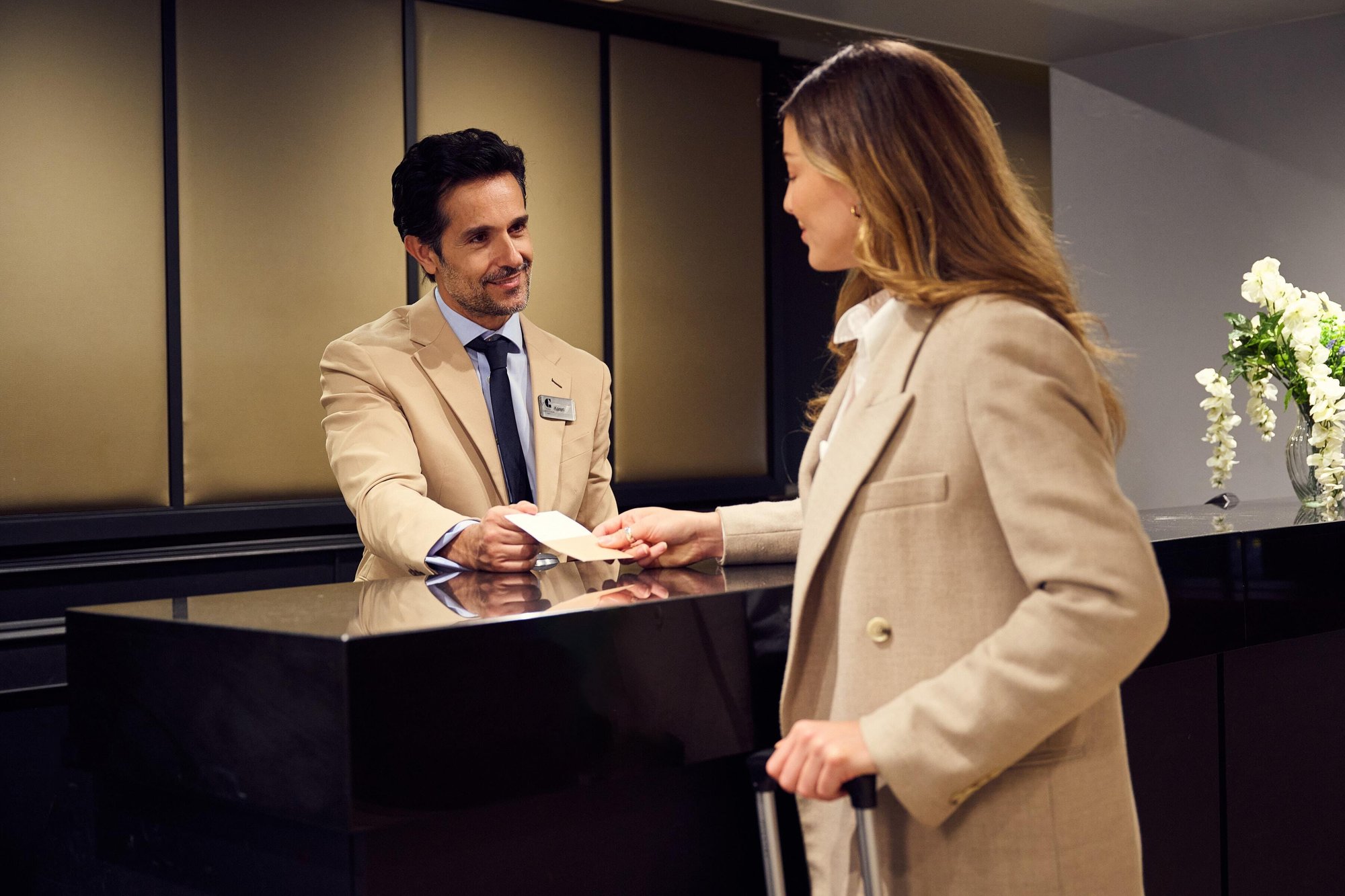






The best customer service strategies in the hotel industry assign each task to whoever does it best, technology or your team. Technology answers repetitive questions at any hour, in the guest's language. Your team spends the time it saves on the guests in front of it. A guest asking about parking at 11pm wants a quick, correct answer. A couple celebrating an anniversary wants someone to remember. Split the work well, and both sound like your hotel.
- Let technology answer questions with one right answer, and keep complaints and occasions with your team.
- Record guest preferences and occasions where every shift can see them.
- Tell guests when they are talking to AI, and let them reach a person in one step.
- Let staff who take over a complaint solve it without waiting for approval.
What Makes Hotel Customer Service Feel Personal?
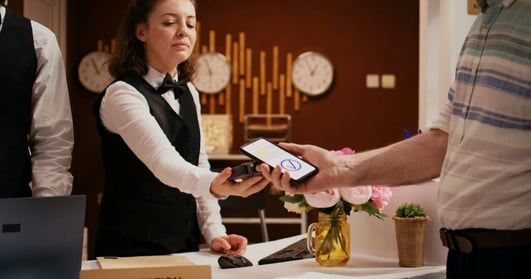
Guests feel looked after when someone recognises them and remembers what matters to them. In an AI analysis of Tripadvisor reviews from some of the UK's highest-performing hotels, human interaction appeared in virtually every review, and guests often named the staff member who helped them.
Guests notice slow service, but they remember people. Good customer service in the hospitality industry uses systems for speed and accuracy, so staff have time for the moments guests write about afterwards.
Which Guest Interactions Should Technology Handle?
The most practical customer service strategies in the hospitality industry sort interactions by how much judgement they need, not by channel. If a question has one right answer, technology can give it. If the right response depends on the guest's mood or history, a person should lead.
|
Guest moment |
Who leads |
Why |
|
Parking, check-in times, pet policy |
AI agent or FAQ |
Same answer every time, often out of hours |
|
Enquiry about a specific stay |
Personalised offer, checked by staff |
A bookable proposal, sent quickly |
|
Complaint during the stay |
Staff |
Needs judgement and authority |
|
Anniversary, birthday or repeat guest |
Staff, prompted by the guest profile |
The system remembers, a person delivers |
According to Profitroom's data, Sunday is the strongest day for AI Agent-assisted bookings. Yet only around 1 in 4 European hotels use AI (1), so many Sunday questions wait until Monday.
How Can Guest Data Make Your Customer Service Strategy More Personal?
Write down what you learn about a guest where the next shift can find it. A preference mentioned to the night porter is lost by breakfast unless it is in the guest profile. Worth recording:
- room preferences, such as a quiet floor or twin beds
- dietary choices
- birthdays, anniversaries and other reasons for the trip
- anything that went wrong on an earlier stay, and how you put it right
Review arrivals at a short daily briefing, so every shift knows who is returning and why. The system remembers a guest, but a person has to act on it. Treat allergies and accessibility needs as health data under GDPR.
Marketing works with groups of guests, not individual preferences. Profitroom's Smart Guest Database segments guests by demographics and loyalty membership, so loyalty members can receive their own offers before the next stay.
When Should a Person Take Over From Technology?
A person should take over when a guest asks for one, complains or makes a request that needs a decision. Since 2 August 2026, the EU AI Act has required AI systems that talk to people to disclose that they are AI, unless that is obvious (2).
In Profitroom's AI Agent, the staff you designate are alerted and take over the chat. The Smart Inbox keeps every AI Agent conversation with a summary, so the person following up knows what the guest already asked.
A handover helps only if the person who takes over can solve the problem. Agree in advance what reception may offer without a manager's approval, such as a room move, a late check-out or dinner on the house.
Book a demo to see how AI Agent answers guests at any hour and hands conversations to the staff you choose.
FAQ
How can a small hotel offer personal service with a small team?
Automate the questions that repeat, so reception is free for the guest at the desk. Then assign one person each day to handle returning guests and special occasions, using a short list from your arrivals report.
Will guests mind talking to an AI agent instead of a person?
Guests mind waiting more than they mind the channel. Trouble starts when an assistant guesses or hides the way to a person. An agent answering only from verified hotel information keeps replies to facts guests can rely on.
How do you measure whether hotel service still feels personal?
Compare how quickly guests get answers outside office hours with how often reviews mention staff by name. Repeat direct bookings complete the picture, because guests who felt looked after come back.
- HOTREC and HES-SO Valais-Wallis, "European Hotel Distribution Study 2026", 15 September 2026, hotrec.eu/media/static/files/import/all_news_2026_2026_35/full-study_european-hotel-distribution-study-2026_hotrec.pdf
- Regulation (EU) 2024/1689 of the European Parliament and of the Council (Artificial Intelligence Act), Article 50, eur-lex.europa.eu/eli/reg/2024/1689/oj